What if we could turn back the clock on aging? Advances in cellular reprogramming, substantial investment and growing interest from prominent technology entrepreneurs have turned the science of aging into one of the most talked-about fields in biotech. Altos Labs, backed by Jeff Bezos and Yuri Milner, launched with $3 billion to explore how to restore the health of our cells. Meanwhile, entrepreneur Bryan Johnson has drawn attention with his highly publicized efforts to measure and slow his own biological aging.
The ambition reaches beyond living longer. Lifespan describes how long we live; healthspan describes how much of that life we spend in good health. Longevity research asks whether we can change how the body ages and delay age-related disease, preserving the ability to move, think and live independently for longer.

Behind the headlines, longevity encompasses products and services already available to consumers, from wearables to diagnostics and preventive care, alongside experimental treatments that have yet to demonstrate their benefits in humans. This raises three questions: what can longevity deliver today, what remains to be proven, and where do the investment opportunities lie? To explore these questions, we mapped 1,031 private longevity companies, examining their progress and what it will take to fulfill their longer-term potential.
MIND THE HEALTHSPAN GAP
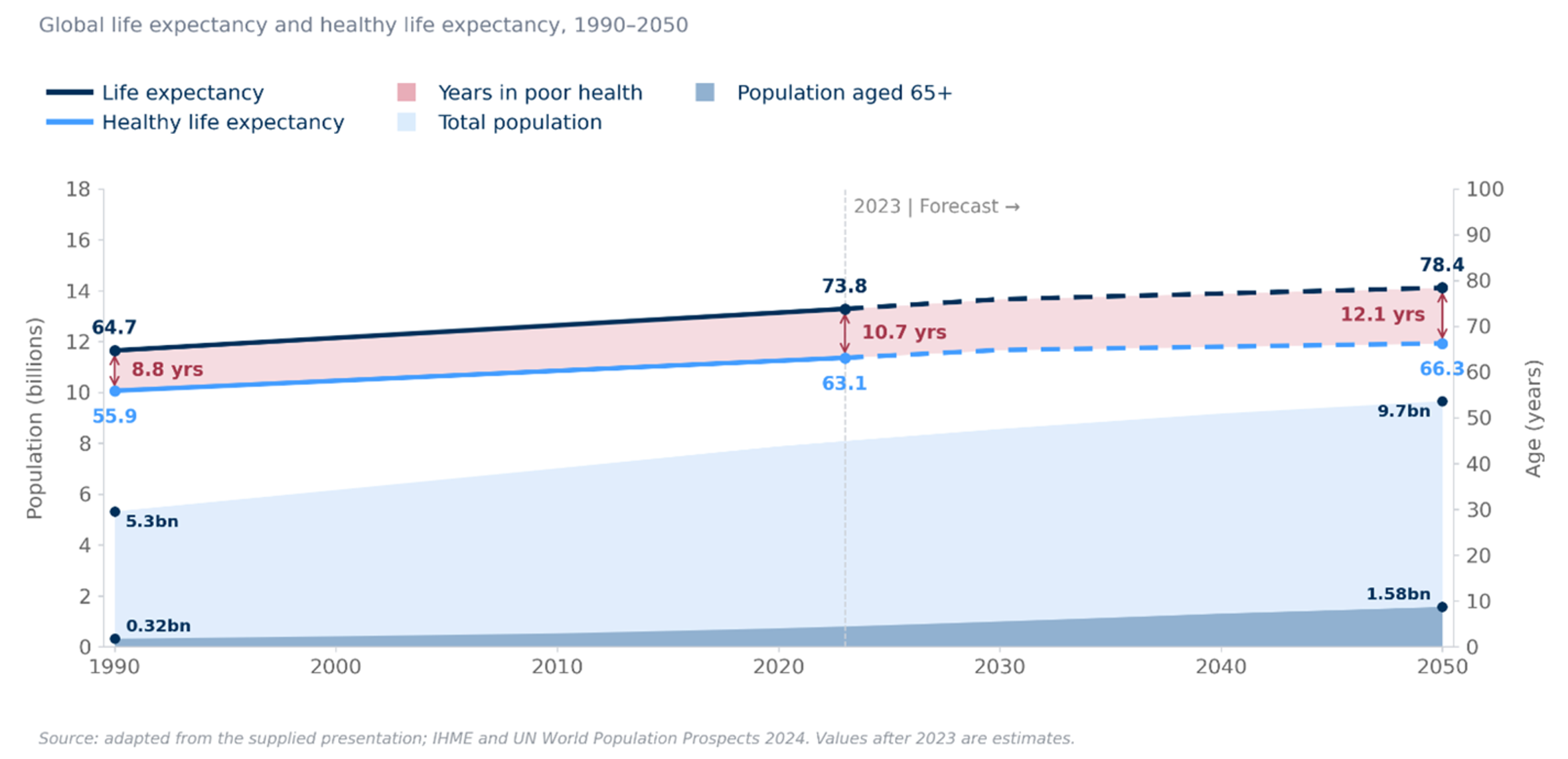
We are living longer. How can we keep more of those years healthy?
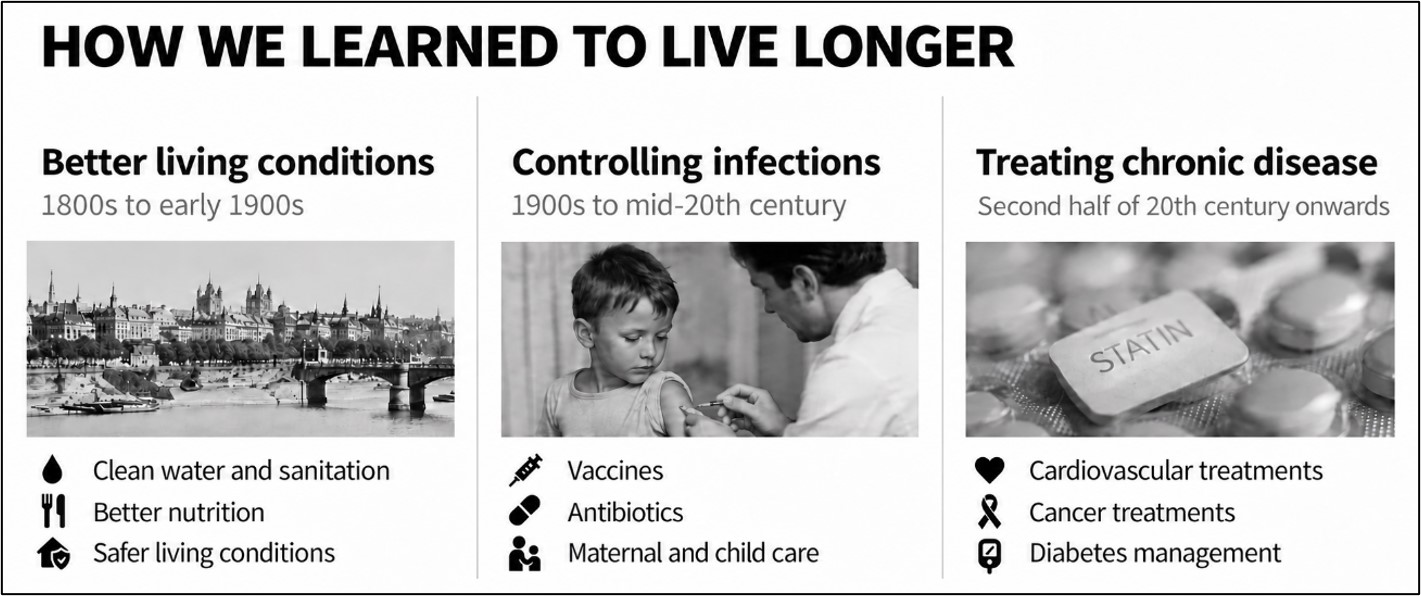
Over the past two centuries, better living conditions, then vaccines and antibiotics, and more recently treatments for chronic diseases such as heart disease and cancer, have extended lives substantially. Ensuring these additional years are spent in good health remains a challenge.
In 2023, global life expectancy reached 73.3 years, while healthy life expectancy stood at 62.8 years. Closing this gap is longevity’s central ambition.
Extending healthspan, not simply lifespan
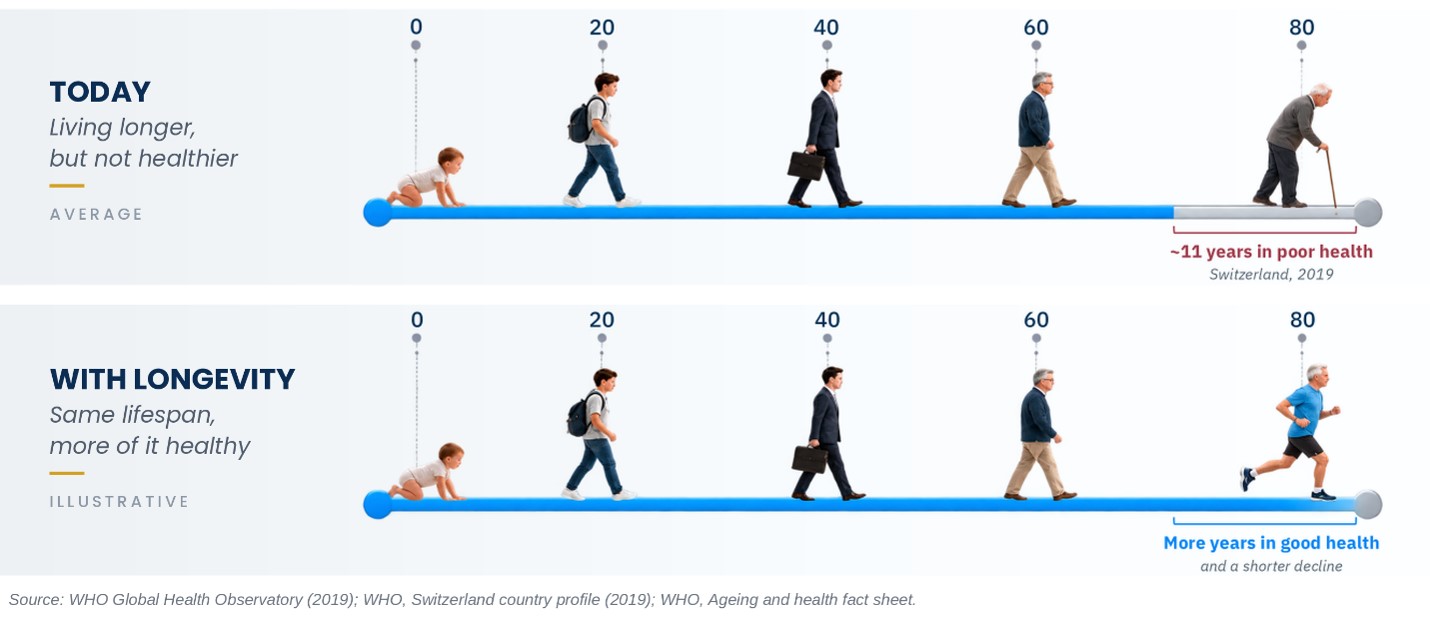
Illness and disability contribute to this gap throughout life, rather than only in later years. As populations age, the need to preserve health becomes more urgent: the United Nations projects that the population aged 65 and over will more than double, from 761 million in 2021 to around 1.6 billion in 2050.
Longer lives still include years in poor health
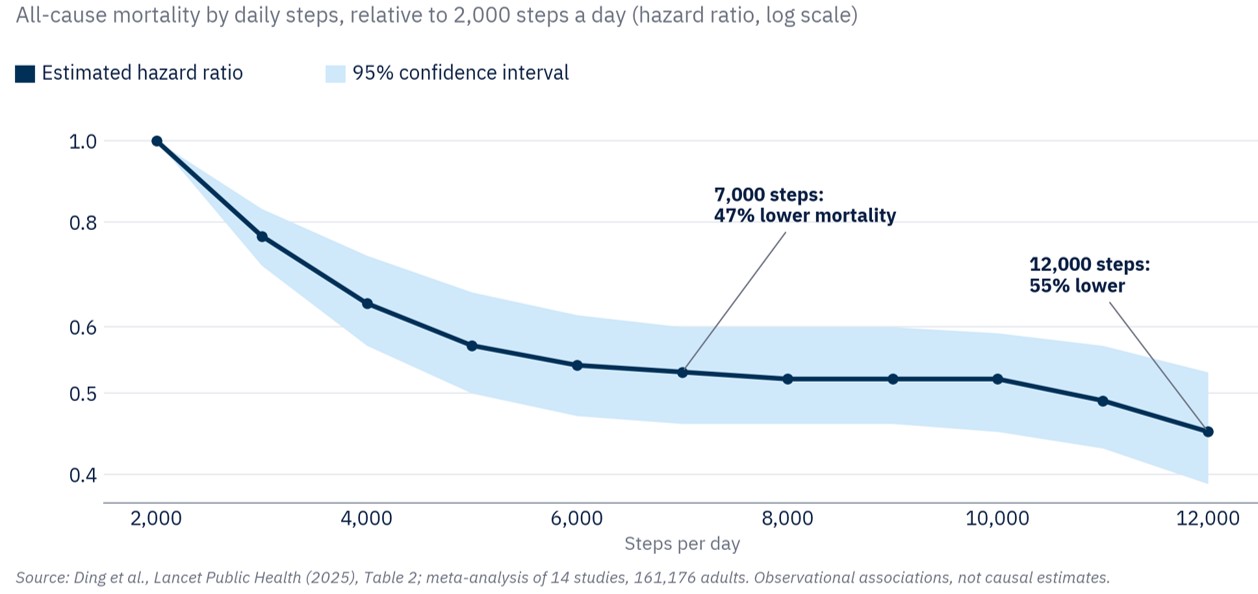
Established lifestyle measures already offer ways to support healthy aging, these include eating well, sleeping well and staying active. Walking offers a simple example. A 2025 meta-analysis found that people walking 7,000 steps a day had a 47% lower mortality compared to those who walked 2,000 steps a day, although the research showcased an association rather than cause and effect.
Walking the longevity intervention everyone already has
Researchers are also exploring whether targeting the biological processes of aging could have an impact. People of the same chronological age may have aged at different rates biologically. Biological age therefore aims to estimate how much the body has aged, rather than simply counting the years lived. Several tests now attempt to measure it, but none yet provides a complete picture.
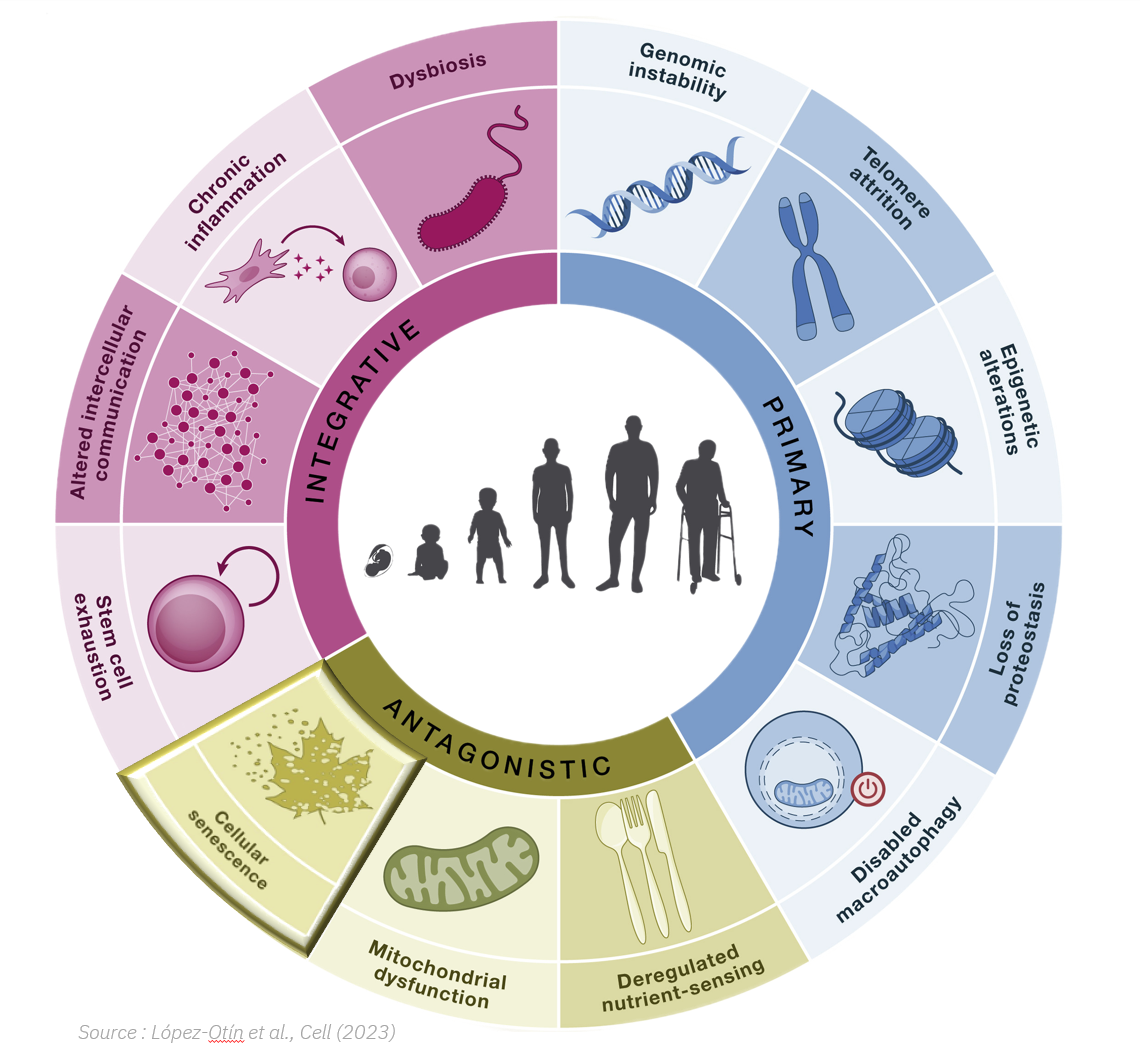
To explain these differences, researchers study the changes that occur in the body over time. At the cellular level, damage accumulates and repair systems become less effective. Aging, however, involves many interconnected processes, from changes in metabolism and immune responses to shifts in the gut microbiome. In 2013, researchers organized these processes into the “hallmarks of aging”, a framework for understanding the biology behind age-related decline. Some of these processes contribute to several diseases, raising the possibility that targeting one could help delay more than one condition.
The Hallmarks of Aging
THE LONGEVITY LANDSCAPE
One ambition, different routes to market.
As our understanding of aging improves, companies are pursuing different ways to turn that knowledge into products and treatments. Through a bottom-up review of the companies in our research universe, we classified their activities to build a map of the emerging industry.
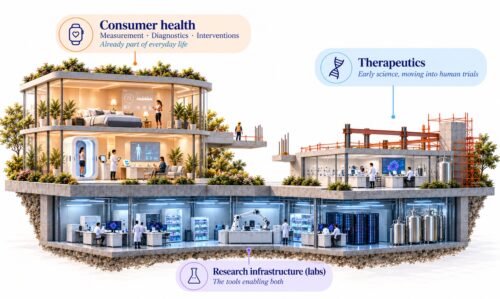
The resulting map identifies three main categories: consumer health, helping people monitor and manage their health, therapeutics, developing new treatments for age-related decline, and infrastructure, supplying the tools behind research and development. These businesses share an ambition but differ in what they can deliver today, the evidence they need and their routes to market.
Reference Capital Longevity Innovation Mapping
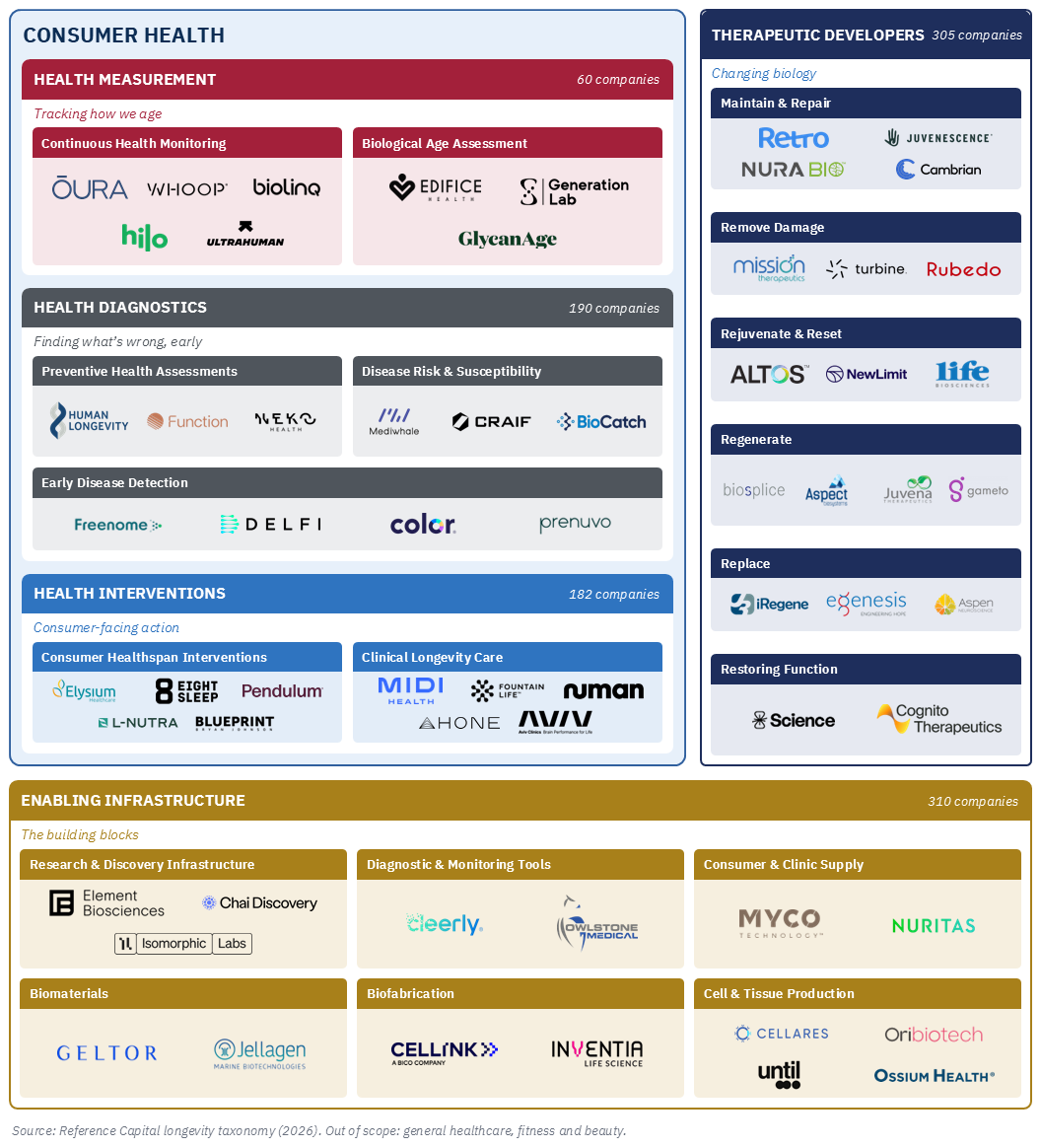
Consumer health includes products and services people can already use. Wearables track sleep, activity and recovery, while blood tests, scans and medical assessments investigate questions that daily monitoring cannot yet answer. Together, these services can help people understand changes in their health and decide when further investigation or care is needed. Direct consumer payments provide a route to market, while evidence of clinical benefits could support insurance coverage and broader healthcare adoption.
Therapeutic developers aim to alter the biological processes behind aging but face a longer path to market. They must translate scientific findings into treatments that safely benefit patients, generally starting with a specific disease. Clinical trials and regulatory approval require substantial time and capital before a new treatment can reach patients.
Enabling infrastructure companies supply capabilities used across both areas, including research tools, testing systems and manufacturing technologies. Many of these technologies also serve wider healthcare needs and can accelerate longevity research and treatment development. As these capabilities advance, longevity companies can benefit from innovation funded by the broader healthcare industry without having to develop the underlying technologies themselves.
A GROWING INDUSTRY, WITH CAPITAL CONCENTRATED IN THE US
Across these three areas, the number of companies has grown substantially. Within our database, the cumulative number of companies founded by 2025 was roughly four times that recorded in 2015.
These businesses span several geographic hubs, although companies and capital are distributed differently. The US leads with around 470 companies, compared with almost 300 in Europe, where the UK and Switzerland are prominent centers. Asia also has active hubs, including China, Japan and South Korea. Funding is more geographically concentrated: US-based companies account for 74% of disclosed capital, compared with 18% for Europe and 4% for China. The figures for China may understate activity, as private company formation and financing are less consistently disclosed.
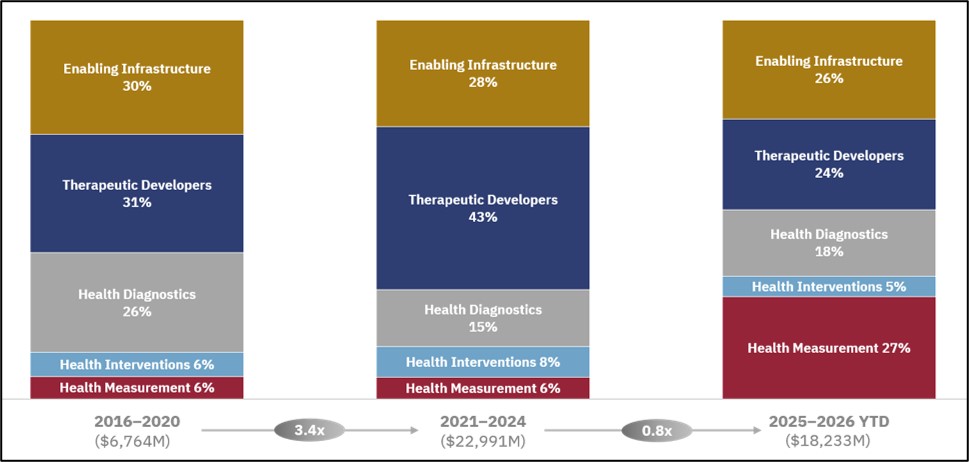
Investment has grown alongside company formation. Across our research universe, funding more than tripled between 2016–2020 and 2021–2024, from $6.8 billion to $23.0 billion. Therapeutics and infrastructure dominated the latter period, which included the pandemic-era investment boom and the $3 billion committed to Altos Labs in 2022. A further $18.2 billion was raised in 2025–2026 YTD, equivalent to nearly 80% of the preceding four-year total in less than two years.
Share of all Longevity Capital Deployed, by layer
CONSUMER HEALTH: FROM TRACKING TO EVERYDAY CARE
Monitoring, testing and care are becoming more connected.
Across consumer health, companies are increasingly combining monitoring, testing and care within integrated platforms, offering a more complete picture of health and helping customers move from measurement to action. Partnerships and acquisitions are driving this consolidation, allowing businesses to broaden their services.
Monitoring health over time
Wearables enable continuous monitoring of sleep, activity and recovery, establishing individual baselines over time and making it easier to identify changes from usual patterns. These businesses are also attracting more capital: health measurement received 27% of longevity funding in 2025–2026 YTD, up from 6% in 2016–2020. Much of that increase came from very large rounds in a few leading companies, including Oura and WHOOP.
For WHOOP, the opportunity extends beyond daily monitoring. Researchers are exploring whether unusual patterns in wearable data could help identify health risks, including early signs of diseases such as cancer. If repeated studies demonstrate that these insights improve early detection or care, insurers may consider covering specific uses, making the service accessible to more people.
Testing, diagnosis and preventive assessments
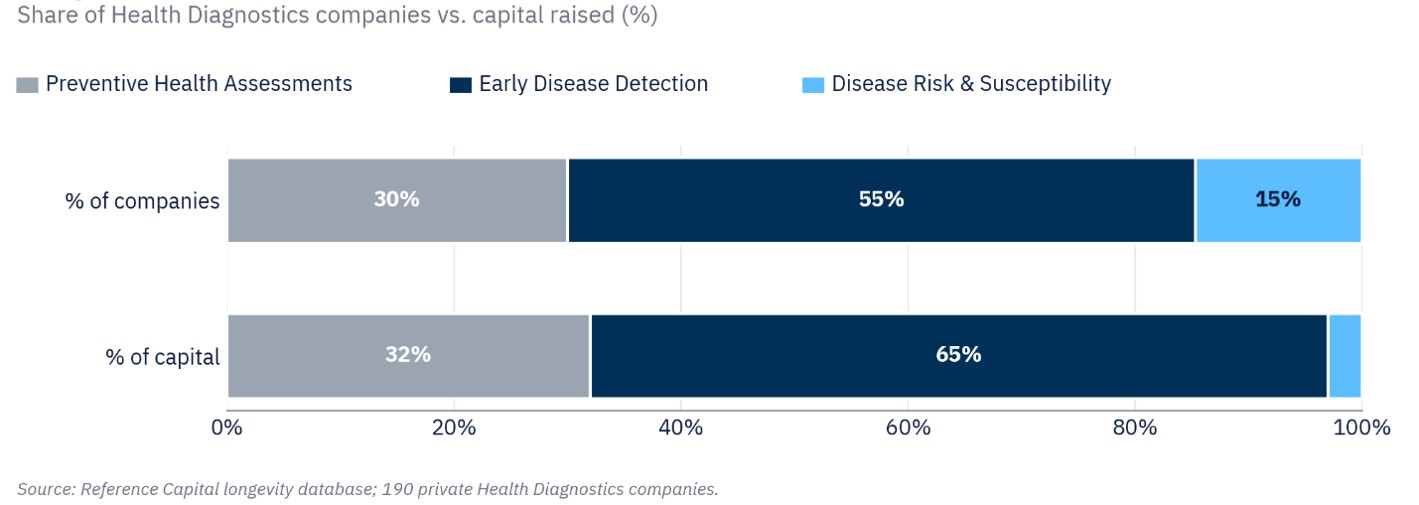
Diagnostic services assess current health, identify potential risks and investigate the presence of disease. The largest share of diagnostic funding goes to early disease detection, which aims to find disease before symptoms appear. These businesses account for 55% of diagnostic companies but 65% of diagnostic funding.
Diagnostics: the money follows the most serious question
Cancer is a major focus of this testing and attracts 72% of early-detection capital. Universal Diagnostics (UDX), a Reference Capital portfolio company, is developing a blood test to detect colorectal cancer and precancerous lesions. If it receives FDA approval, the planned US rollout would take place through Quest Diagnostics.
Blood tests are also making Alzheimer’s diagnosis more accessible. US company C2N Diagnostics already offers a doctor-ordered test that measures proteins linked to Alzheimer’s-related changes in the brain. It can help investigate memory problems while reducing the need for more costly or invasive diagnostic procedures in some patients.
Other services look more broadly at a person’s current health. Blood tests measure cholesterol, blood sugar and hormone levels, adding information that wearables cannot capture. Function Health offers regular laboratory testing through a membership, with clinicians reviewing the results. WHOOP has also moved into testing through Advanced Labs, working with Quest Diagnostics to integrate blood test results with wearable data.
Some providers offer a more holistic assessment of health by combining multiple evaluations in a single visit. Neko Health, for example, combines skin and body imaging, cardiovascular measurements and blood testing, followed by a consultation with a clinician. Together with medical history, these findings provide a broader assessment of health and identify areas requiring attention. These periodic assessments complement the everyday patterns captured by wearables.
Consumer products and care available today
Better insight into health raises the question of how to act on it. Consumer products already support sleep, nutrition and healthier routines. Eight Sleep, for example, goes beyond tracking: its mattress cover automatically adjusts bed temperature through the night to improve sleep conditions.
Devices and supplements attract most consumer-product funding within interventions. Supplements range from familiar vitamins and minerals to newer products marketed for longevity, with varying levels of evidence supporting their benefits.
Clinical services offer a more personalized approach, combining medical advice with treatment and follow-up. Some services provide care remotely, including women’s health and hormone care. Others operate through physical longevity clinics.
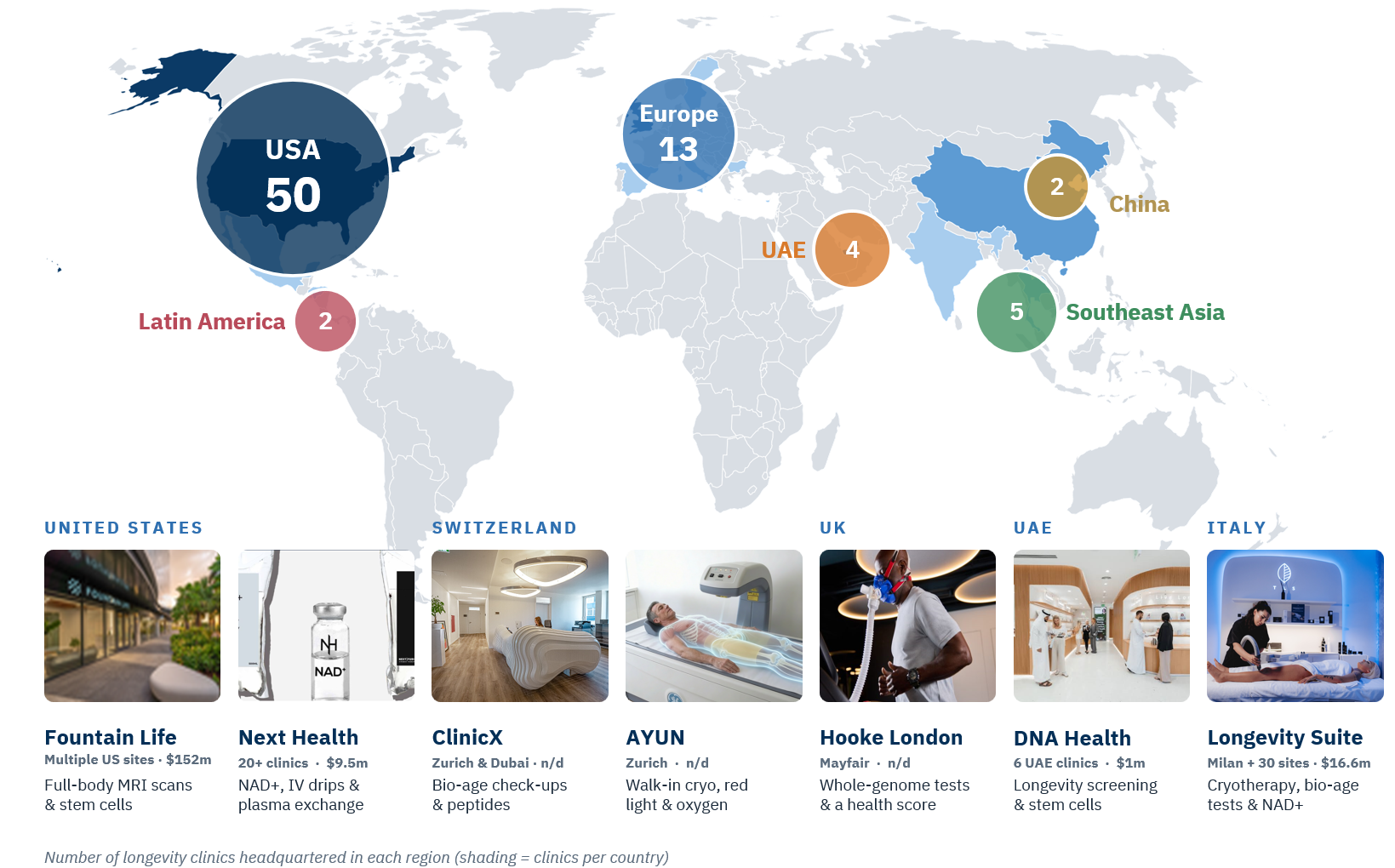
We identified 76 investor-backed clinic businesses across 15 countries, around two-thirds headquartered in the US. These clinics typically combine testing, medical consultations and personalized recommendations with treatment or follow-up. Offerings vary, as does the evidence supporting each service. The commercial challenge is to deliver useful, consistent care beyond the initial assessment.
Longevity Clinics: US leads
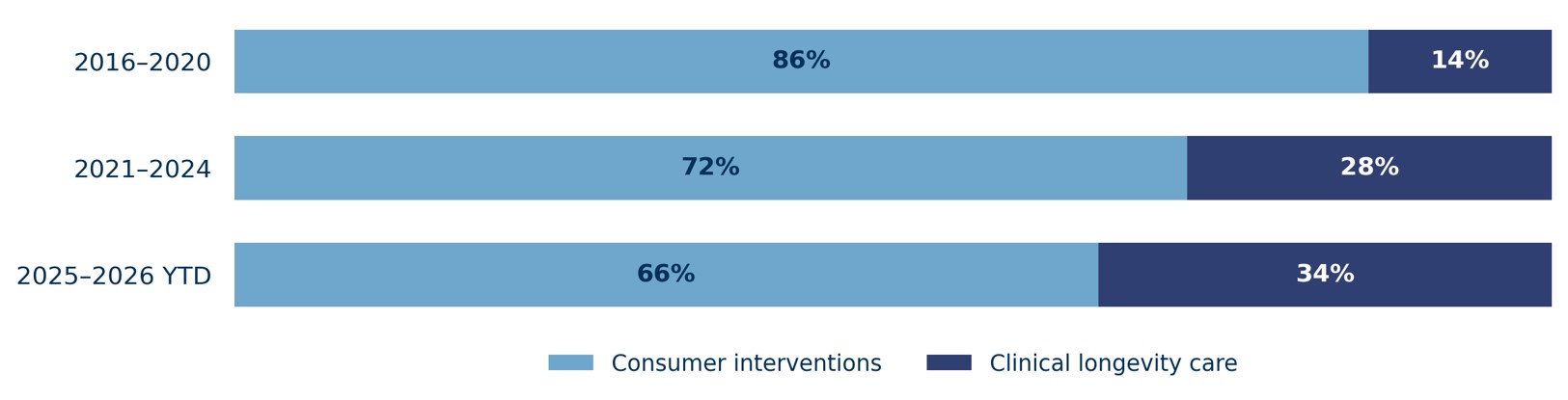
Capital is increasingly backing this care model. Across the broader clinical longevity care category, including both remote services and physical clinics, the share of interventions funding rose from 14% in 2016–2020 to 34% in 2025–2026 YTD. Consumer products still attracted the majority, but clinician-led care is taking a larger share.
Clinical longevity care’s funding share
Despite this growing integration, access remains largely dependent on consumers’ ability to pay, as many longevity services are not covered by insurance. Costs range from wearable subscriptions to expensive check-ups and clinic programs, limiting access to higher-priced services. For companies, retaining customers depends on providing clear guidance, useful care and benefits that justify continued spending.
THERAPEUTICS: THE AMBITION NOW NEEDS HUMAN EVIDENCE
Large checks have funded the science. Human trials are beginning to test it.
In 1993, researchers found that a mutation in a single gene could more than double a worm’s lifespan, providing striking evidence that aging could be influenced through biology. Since then, scientists have explored different ways to influence aging, from repairing cellular damage and restoring cell function to targeting metabolism and inflammation. Some experimental treatments are now entering human trials, while established medicines are revealing unexpected possibilities. GLP-1 drugs, originally developed for type 2 diabetes and now widely used for weight loss, work by mimicking a hormone that helps regulate blood sugar and appetite. Beyond their proven benefits across several diseases, recent research suggests they may also influence certain measures of biological age. The evidence is promising, but whether any of these approaches can slow or reverse aging in humans remains to be proven.
Our research identified 305 therapeutic developers that have raised around $17 billion. We organized them into six approaches, broadly divided into two groups. The first aims to help existing cells repair damage, clear harmful material or recover aspects of youthful function. The second seeks to rebuild tissue, replace damaged cells or organs, or restore lost capabilities. These approaches can involve transplants, surgery or implanted devices. Working on existing cells may avoid those procedures, although delivering the treatment safely can still be complex.
Six Therapeutic Approaches
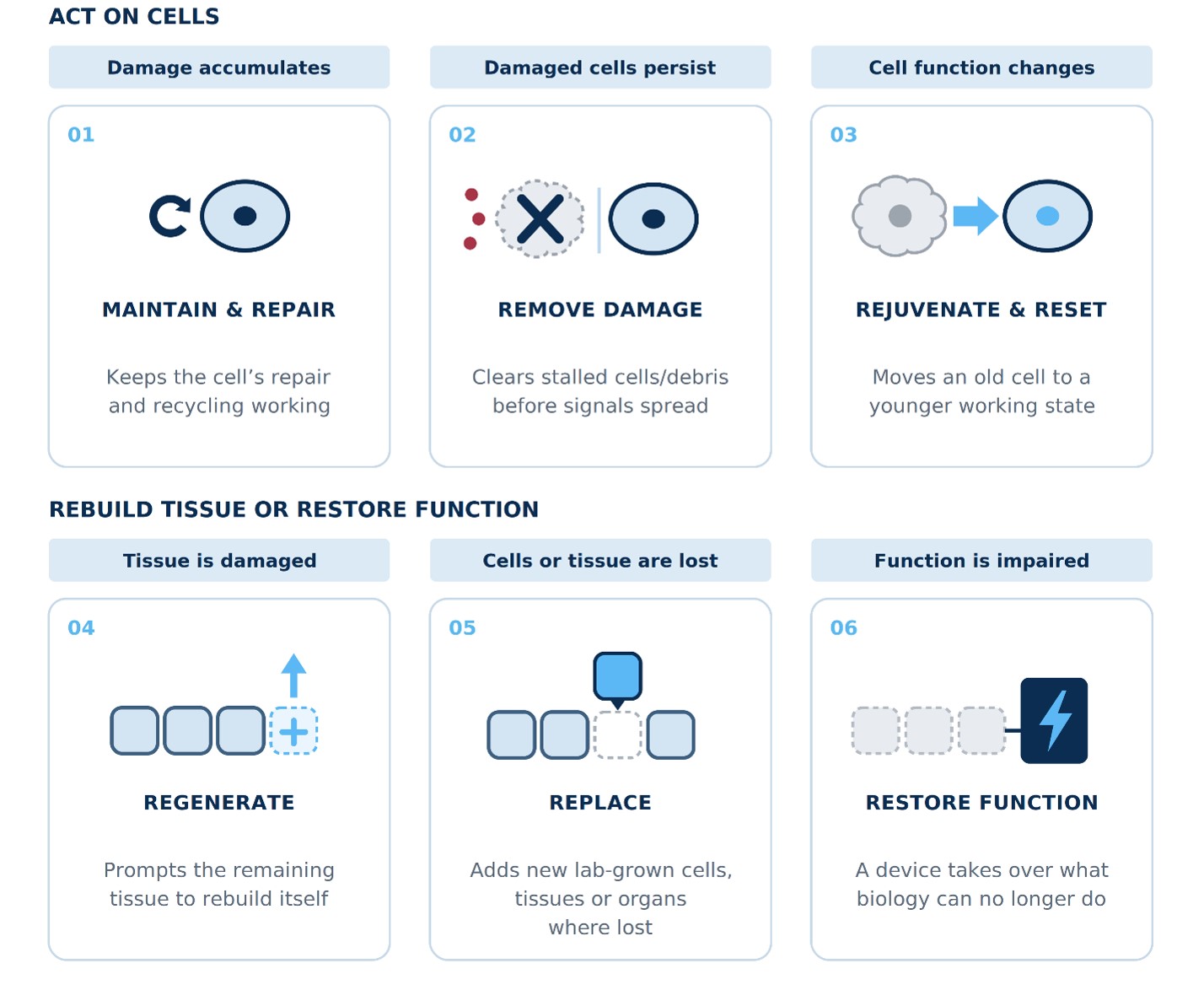
Regenerate is the largest category by number of companies, with 127 focused on rebuilding damaged tissue. Rejuvenate & Reset includes just 20 companies but has attracted $6.7 billion in funding.
Life Biosciences, a Boston-based biotechnology company co-founded by Harvard geneticist David Sinclair, is among the first to bring cellular reprogramming into human trials. The approach aims to make older or damaged cells function more like younger ones. The company is initially targeting diseases of the eye, where treatment can be injected directly and researchers can measure changes in vision. In October 2026, the company reported early Phase I safety data from three participants with glaucoma, two of whom showed preliminary improvements in visual field tests. Whether the treatment produces lasting improvements in vision remains to be established.
While the broader ambition is to influence aging, clinical development begins with a specific condition and a measurable benefit. Preserving vision could create a valuable treatment in its own right, before potentially expanding the same approach to other organs or age-related diseases, subject to further evidence.
THE TOOLS BEHIND THE SCIENCE HAVE THEIR OWN MARKET
Capabilities developed for wider markets are finding applications across research, testing and care.
Longevity research and development also depend on a broad range of enabling technologies. Infrastructure companies help researchers study biology, laboratories analyze samples, health businesses collect measurements and manufacturers produce treatments. These technologies are largely developed for broader healthcare markets, allowing longevity companies to benefit from advances without having to fund their development themselves.
AI drug discovery illustrates this opportunity. Developing new medicines involves testing many potential candidates, a process that is slow, costly and uncertain. AI can help identify promising options faster. In antibody discovery, for example, models can design molecules intended to bind to specific biological targets, allowing researchers to focus their laboratory testing on the most promising candidates and determine which ones work.
The potential to reduce drug development costs is attracting partnerships between pharmaceutical companies, specialist AI developers and large technology groups. Isomorphic Labs works with Eli Lilly and Novartis, while NVIDIA and Lilly have announced plans to invest up to $1 billion in a joint AI research laboratory. OpenAI’s GPT-Rosalind and Anthropic’s Claude Science are also expanding into life sciences research, bringing new competition for specialists. Specialist developers may differentiate themselves by combining proprietary biological data with laboratory expertise, testing predictions and using experimental results to improve future designs. Their advantage will depend on demonstrating better drug candidates or measurable savings in time and cost. Because these technologies serve pharmaceutical research broadly, longevity programs can benefit from advances developed for other diseases.
These companies also follow different business models. Some generate revenue by providing tools or designing drug candidates for pharmaceutical partners, while others develop their own treatments, taking on the costs and risks of clinical trials. For investors, these represent very different risk profiles and paths to market.
WHO FUNDS THE JOURNEY, AND WHO BUYS
Different parts of longevity attract different sources of capital.
To understand who finances longevity, we mapped the backers of the 1,031 companies in our research universe. We identified more than 5,800 investors, then focused on the 172 that had backed at least five companies in longevity. This highlights the most active investors, including public institutions, specialist longevity funds and generalist venture firms.
Public institutions are the most frequent backers in our mapping, occupying the top four positions. Around three-quarters of their relationships are in therapeutics or infrastructure. These areas often require funding well before generating commercial revenues, while the resulting knowledge, treatments and tools can benefit healthcare beyond longevity.
Dedicated longevity funds remain a relatively small group. Specialists such as Age1 and Healthspan Capital concentrate heavily on therapeutic developers, which account for 83% of their recorded relationships. Assessing these businesses requires scientific expertise and the ability to support long development timelines. Generalists such as Khosla Ventures, Founders Fund and General Catalyst invest more broadly across the landscape, including consumer businesses where customer adoption, revenue growth and retention provide additional measures of progress.
Around 75% of acquisitions in our mapping were in therapeutics or infrastructure, where buyers seek treatments, research tools, testing systems and manufacturing capabilities. Infrastructure businesses also attract buyers seeking technologies with applications beyond longevity.
BETTER HEALTH TODAY, NEW POSSIBILITIES TOMORROW
Longevity is progressing on several fronts. Wearables and health assessments are giving people a clearer picture of their health, helping them monitor changes, manage risks and make more informed decisions. Better measurement could also support earlier disease detection and more personalized care. Meanwhile, advances in aging biology and AI are opening new possibilities for treatments, although demonstrating lasting benefits in humans will take time.
For all the excitement around rejuvenation, the most established ways to support healthier aging remain surprisingly familiar: eating well, sleeping well and staying active. Monitoring can help people understand their health and act on that knowledge, while new treatments may eventually offer ways to influence aging itself. Until then, a walk is a good place to start.
SOURCES & NOTES
- Reference Capital longevity database (2026), built on PitchBook data and company research: 1,031 private companies retained from more than 3,000 reviewed; capital by sector and year (deal-level equity and IPO rounds; 2026 year to date); concentration, company counts, exits and investor counts. Deal data was matched to companies by name.
- IHME; UN World Population Prospects 2024: life expectancy, healthy life expectancy and population aged 65+ (2024–2050 values are estimates). WHO Global Health Observatory and Switzerland country profile (2019).
- López-Otín et al., “Hallmarks of aging: An expanding universe,” Cell (2023); Kulkarni et al., Aging Cell (2022); Watson et al. (2025) on multimorbidity among US adults 65+.
- FDA approvals and clearances: Amyvid (2012), Lumipulse CSF (2022), Alzheimer’s blood tests (2025–26); Alzheimer’s Association (2026).
- FDA (2025–26); EFSA (2026); MHRA; FSVO; Swissmedic (2026); SAMR: regulatory status of supplements and peptides.
- Life Biosciences (2026); ClinicalTrials.gov (NCT07290244); Endpoints News (2026); Tracxn (June 2026); NewLimit (2026).
- Chai Discovery announcements (2025, 2026) and Series C (2026); Anthropic, Claude for Life Sciences (2025); OpenAI, GPT-Rosalind (April 2026); Endpoints News (January 2026); Pfizer (June 2026); CNBC (June 2026); Fierce Biotech (July 2026).
- Company announcements and acquisitions: Oura (Veri, Galen AI, Sparta Science), Function Health (Ezra, Getlabs, SuppCo), Neko Health, WHOOP, Biolinq, Universal Diagnostics; Siemens–Dotmatics, Terumo–OrganOx, Lilly–Insilico Medicine.
- Ding D, Nguyen B, Nau T, et al., “Daily steps and health outcomes in adults: a systematic review and dose-response meta-analysis,” Lancet Public Health 10(8), e668–e681 (2025), Table 2. Hazard ratios are relative, not absolute, risk changes. Pahor M et al., “Effect of structured physical activity on prevention of major mobility disability in older adults: the LIFE Study randomized clinical trial,” JAMA 311(23), 2387–2396 (2014); outcome was mobility disability, not mortality.
- CDC, National Diabetes Prevention Program (February 2026): more than 8 in 10 US adults with prediabetes do not know it. Lee SH et al., MMWR 71 (2022): 10.0% of US adults met vegetable recommendations in 2019. Elgaddal N et al., NCHS Data Brief 443 (2022): 24.2% met both aerobic and muscle-strengthening guidelines in 2020. Ng AE et al., NCHS Data Brief 559 (2026): 54.8% woke well-rested most days or every day in 2024 (self-reported). Figures rounded; different survey years.
- Insilico Medicine, Phase III initiation of rentosertib (NCT07687459), 7 July 2026; Bio-IT World (8 July 2026); Xu et al., Nature Medicine (2025), Phase IIa GENESIS-IPF.
- FDA, Biolinq De Novo classification (DEN240080, 2025); FDA, first blood test used in diagnosing Alzheimer’s disease (May 2025); Quest Diagnostics and Universal DX commercial collaboration (2023), conditional on FDA approval.